


Last week, I was going through a beauty brand’s blog.
The content was good. It was relevant. It was well written.
Out of curiosity, I searched one of their blog posts on Google.
It didn’t show up.
Not on page one. Not on page two. Nowhere.
I thought it was a content quality issue. So I went deeper into their blog and read through multiple posts carefully.
The problem was not the content quality.
It was one simple mistake they were making repeatedly — and it was the reason none of their blogs were showing up on Google.
The worst part? They had no idea.
And after auditing more Indian beauty brand blogs, I realized this wasn’t just one brand’s problem. Most Indian beauty brands publishing blogs are making the same keyword mistakes — and losing thousands of potential visitors every single month because of it.
In this post, the top 10 keyword mistakes beauty brands make — I will break down with real examples so you can spot them in your own content.
Why is Beauty Blog not ranking?
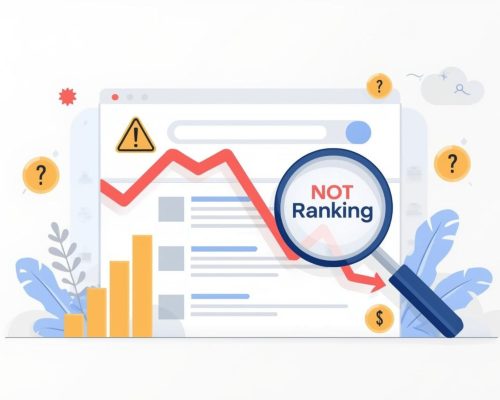
Even though beauty brands mainly focus on Instagram for their branding, some beauty brands focus on creating long-form content on their websites to build their brand.
They believe creating more content can help to rank their blog.
Here is where they fail to understand the keyword strategy.
Using a keyword strategy is the main key to driving traffic to their website.
Most beauty blogs fail to rank not because of content issues, but becase if not using keywords strategically.
Let’s break down the most common 10 keyword mistakes beauty brands make.
Top 10 keyword mistakes beauty brands make
- Not using keywords naturally in content.
Most beauty blogs don’t fail because of choosing the wrong keywords but because of using keywords in the wrong way.
A lot of brands either try to add the same keywords repeatedly, or they don’t use the keywords when it actually matters.
But the results?
The content feels unnatural to the readers.
It feels like they have used keywords forcefully in the content not feel natural.
And here is where readers won’t stay, and Google notices that.
On the other side, some blogs use duplicate keywords in their content, focusing on solving 2 problem at one blog post, and Google gets confused about it.
When you use keywords naturally in your content and focus on a single problem in a single blog post, readers tend to stay until the end, and Google notices.
- Ignoring search intent
Choosing the right keywords is crucial, but understanding the intent behind the search is also crucial.
Understanding what the user is actually searching is what really matters.
When someone is searching on Google for the best face wash for oily skin.
Now, the intent here is that the user is looking for a recommendation of products, not an educational blog. If your blog is related to education, it will not perform well, as that’s not what users are searching for.
Brand needs to understand the purpose behind keywords, whether they are looking for information, a product review, or are ready to purchase.
- Using social media terms instead of search language
Most brands use terms that are popular on social media like Instagram and TikTok.
These terms are good for social media, but in reality, on a website, it doesn’t work.
Social media and websites are two completely different platforms, and each has different search terms.
For example,
7-day glowing skin challenge: What actually works?
This is one of the headlines from a blog post.
The word challenge works on social media, not on Google.
On Google, people search for routine or How to get glowing skin naturally?
These terms are used in Google search.
- Writing overly long keywords that no one uses
Sometimes brands try to be too specific and end up unclear about the intent, or using complicated terms or phrases that people don’t search for.
Here is an example of one of the blogs that uses it.
Lightweight body lotions for humid weather: non – greasy care – people dot search with these terms lightweight, instead, they search best body lotion for summer.
This is a headline a blog used.
The problem wth these headlines is lightweight, humid weather, and non-greasy care; these terms are not searched on Google by users.
Google doesn’t rank the words that are not used on searched.
- Creating duplicate or competing keywords
Many brands are using the same intent keywords on a single page, and it’s creating confusion on Google search.
Here is an example from one of the blog headlines: 7 ways to remove tan from face naturally at home.”
Here both keywords naturally, at home both are redundant. .
Instead of strengthening the headline, it weakens it by wasting valuable keyword space that could have been used for something more specific, like a skin type (“for sensitive skin”) or a result (“in 3 days”).
A tighter, stronger version would be: “7 natural ways to remove tan from face at home for all skin types” — one modifier, one clear audience, no repetition.
6. Ignoring Long-Tail Keywords
Most indian beauty brands go after broad keywords like sincare, best sunscreen, best moisturizer.
These keywords are searched by people and have good search volume.
But here is a problem. These keywords don’t give a clear search intent, and it doesnt show what the users are actually searching for.
Long tail keyword research shows a clear intent behind the user search. For example, instead of best sunscreen, targeting keywords like best sunscreen for oily skin, best face wash for dry skin, best moisturizer during summer.
These keywords are clear and have lower competition, and most importantly, it clearly shows you what the users are actually searching for.
Targeting these keywords can make you content more relevant to what the users are actually searching for.
Broad keywords bring random traffic. Long-tail keywords bring the right traffic.
7. Not Being Specific About Skin Types and Skin Concerns
Now, one of the most common mistakes most beauty brands make when it comes to content creation is not being specific about skin type.
Here is a keyword example from one blog used on their blog
“ Which is the best sunscreen in 2026?”
Now the intent of the keywords is clear, but what about for whom is it best? Is it for dry skin, oily skin, or for summer or winter?
Everybody’s skin type is different and has different concerns.
Being clear about the skin types or concerns will help users to know if this is for their skin or not.
When a beauty brand ignores skin types, they are ignoring the most qualified audience they could attract for their product.
8. One Blog Post Targeting Two or More Different Key
Targeting two different keywords in one blog is one of the most common and unnoticed mistakes beauty brands make.
Here is another example of a blog post: Benefit and use of face wash: A simple guide to clearer skin
In these keywords, they are talking about 3 different things: benefits, use, and a guide.
Now th confuse here is that the blog post is talking about benefit, or gain, or use.
These are two completely different search intents living inside one blog post.
When someone searches “benefits of face wash,” they want to understand why they should use a face wash.
It’s an awareness they want to create.
When someone searches “Guide to clearer skin,” they need a step-by-step routine to follow. This is educational content, not awareness content. You are talking to two different people at the same time.
Now Google gets confused when a page tries to rank for two different search intents.
One blog post. One keyword. One clear intent. That is the rule.
9. Chasing High Volume Keywords Only
More search volume doesn’t mean more traffic.
It means there is a high competition for a particular keyword, and it’s difficult to rank.
Keywords with less competition are an easy way to make your blog rank.
When there is less competition for a keyword, it is easy to rank because only a few people are searching.
Keywords that have a good search volume with less competition are an easy way to rank.
10. Not Updating Old Content With Better Keywords
Keywords are not a one-time process. It’s an ongoing process.
A blog updated wth keywords are high like to rank than a blog that has not been updated for months or years.
Updating old content is the fastest way to recover lost traffic and keep driving more traffic.
Users want fresh content, not outdated content.
Google rewards freshness. A post you wrote in 2022 with a 2025 update signal will often outperform a brand-new post on the same topic.
Your old content is not dead. It is just waiting to be fixed.
Conclusion
Most beauty brands are failing not because of bad content but because of keyword mistakes.
Not using keywords naturally. Ignoring search intent. Using Instagram language on Google. Targeting keywords that are too broad, too long, or too competitive. Writing one post for two different audiences. Never going back to fix old content.
These are not complicated problems. But they are costly ones.
Every blog post your brand publishes without a clear keyword strategy is a missed opportunity — a potential customer who searched for exactly what you offer, but found your competitor instead.
The good news is that every single mistake on this list is fixable. You do not need to delete your old content or start from scratch. You need a clear keyword strategy behind every post you publish from here.
1. What are long-tail keywords in beauty SEO?
Long-tail keywords are specific search phrases, such as “best sunscreen for oily skin,” rather than broad terms like “sunscreen.” They help target the right audience and improve the chances of ranking. Because these keywords have a clear search intent, what the users are actually searching for.
2. Why don’t beauty blogs rank on Google?
Most beauty blogs don’t rank because of poor keyword research, unclear search intent, and using social media language instead of search-focused content. The main reason why beauty blogs fail is not because of bad content but because of using the wrong keywords and a lack of understanding of search intent.
3. Should I use trending keywords in blog content?
Not always. Trending keywords may work on social media, but SEO requires search intent. Focus on what users are actually searching on Google. Trending words are not searched on Google. Both Instagram and Google have different keywords. Using trendy kyw . Trending keywords are for short-term views, it doesn’t help in the long term.
4. How many keywords should one blog target?
Ideally, one blog should focus on one primary keyword and one clear intent for better SEO performance. The more clear on one search intent about the particular keyword and the search intent, the clearer you are about what content to create. Using multiple keywords or duplicating keywords confuses readers as well as Google, and it might affect a blog’s ranking.
5. What is search intent in SEO?
Search intent is an understanding of words or phrases that users are searching for . Wheather they are searching for information, product recommention, are want to buy a product.
6. How do I find the right keywords for beauty blogs?
Start by searching your topic on Google and look at autocomplete suggestions, “People also ask,” and related searches. These reflect real user queries and help you choose better keywords. They are many tools like ubersugest, ahrefs keywords research for keyword research. These tools gives you what are the words and phrases that users use to search on Google.
7. What is the difference between search language and social media language?
Search language is how people type queries on search engines (e.g., “how to get glowing skin naturally”), while social media language is more creative and trend-based (e.g., “glowing skin challenge”). SEO works better with search-focused language. Search language isa exact work people use to search on Google.
8. Can I target the same keyword in multiple blog posts?
It’s not recommended. Targeting the same keyword repeatedly can lead to keyword cannibalization, where your own content competes against itself instead of ranking higher. it confused Google and user what your content is about.
9. How do I know if my blog matches search intent?
Search your keyword on Google and analyze the top results. If they are guides, your content should be a guide. If they are product lists, your content should match that format. Search intent is an understanding of what your audience is actually searching for.
10. Why is my beauty blog getting traffic but no conversions?
This usually happens when the keyword doesn’t match user intent. For example, informational content attracts readers, but if you push products without aligning with their intent, conversions drop. Understand the intent of whether the user is searching for information, education, or product reviews.
Very nice article, we need more such articles with real insights.
Thank you so much. Glad you liked it.